
Finding confidence to share your voice with kirtan & devotional music. Listen and repeat…
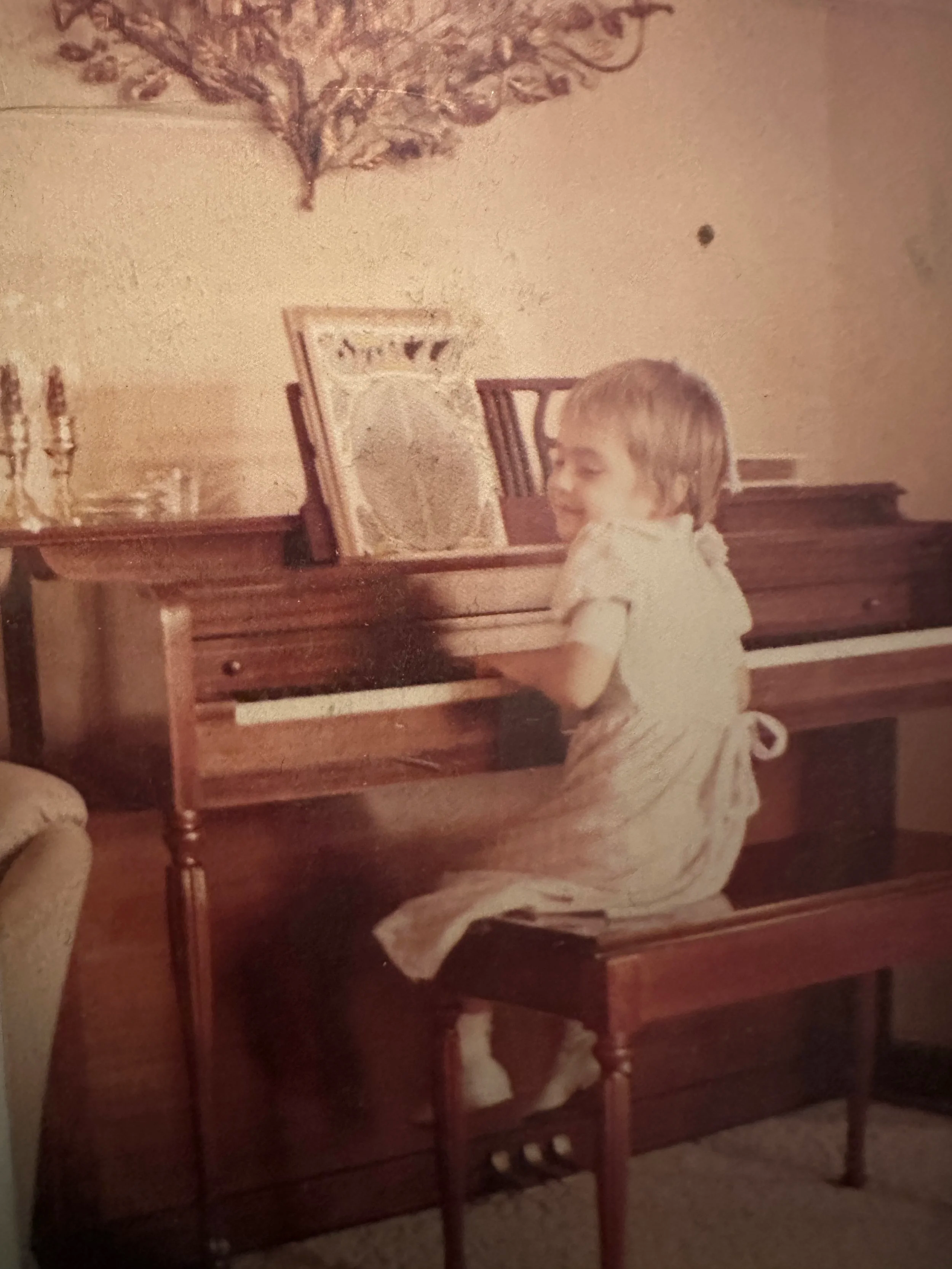
Me, at four.
As a kid, I always loved to sing. I would sing along with albums from my Dad’s record collection early on, (mostly Broadway shows) and I would act out all the parts in the big mirror that hung over the fireplace in the living room. This was an early form of listening and copying that put me in good stead to chant Kirtan and study Indian Classical music later in life! Unfortunately, like a lot of us, I lost my way with singing because I didn’t feel confident or know how or where I could sing freely alone or with others. I stopped singing altogether as a teen except for alone in the car with pop songs. In my twenties, at my yoga studio I discovered Kirtan and Indian Classical vocal classes.
In Indian Classical music, the base practice for learning any instrument is to sing. Just like a child, we are asked to listen to the teacher and repeat. The goal is to sound like our teacher so that, in the process, we uncover and reveal our own authentic voice. That process can sound contradictory, however, we often need to start at zero to get to what is real and aren’t aware of all the unconscious patterns we carry.
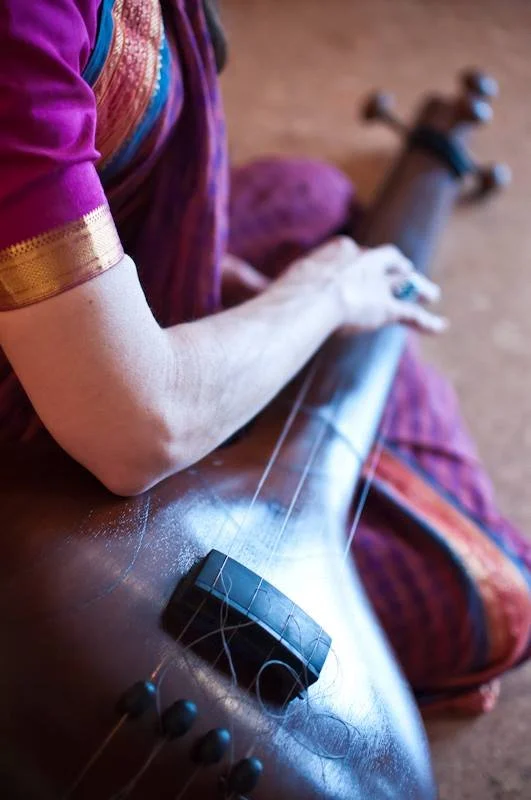
Kavita playing a vocal tambura
Similarly, in Kirtan, all we are asked to do is sing. The leader chants a line, we listen and then we chant it back. No one is checking to see if we do it right. Instead, we are encouraged to simply listen and repeat , to lose ourselves in the practice and the vibrations of our voice and the voices around us. This is wonderful place to be and, for many of us, it gets us singing again if we had stopped somewhere along the way. What do we do though when we want to learn to sing on our own? Or share kirtan or devotional songs with others?
Vocal confidence starts by finding where your voice feels most at ease—where singing takes the least effort. We call this pitch your ‘home note’ (my words) or officially in Indian music your “SA.” Through deep listening and spending time in your home note (SA) where the voice is the most comfortable, we are able to fully relax and let go of tension while we sing. Really! Imagine that! In this way we get to know our authentic voice. Spending time here singing long tones (like ‘Ahhhhh” or “Saaaaaa” ) we also improve our intonation, breath support and relax our nervous system.
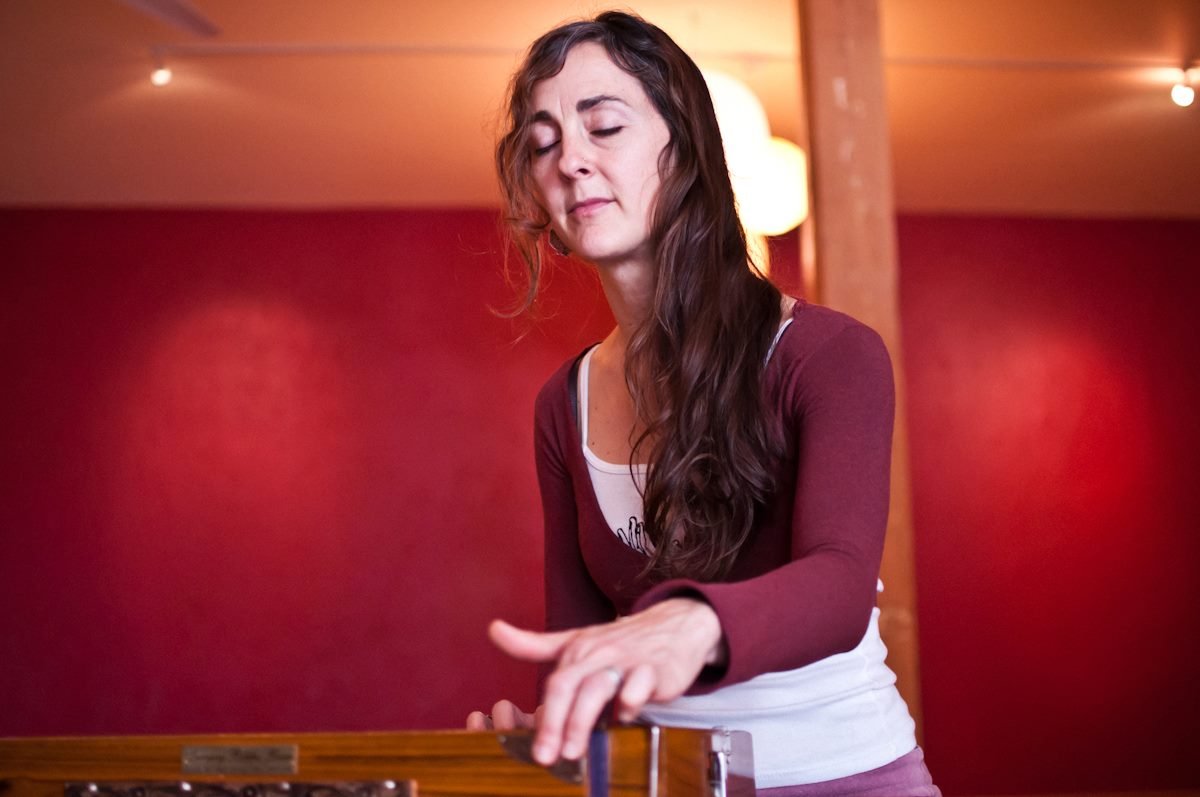
Kavita playing a harmonium
We use the drone of the harmonium or tambura to reinforce our ‘home note’ (SA.) which creates an even more grounding experience for the mind and body. After a while practicing in this way, we start to feel like we are in a safe place singing and our nerves start to calm down. This isn’t to say we don’t get nervous at if we are going to share our voice with someone else BUT, the minute the drone starts it WILL have an affect on us. Often this allows for a lessening of nervous energy and we are able to get through the experience. With practice this becomes more comfortable and even enjoyable!
I witness people consistently move from discomfort while singing in front of others to being able to play songs, sing and share their voice. Something about listening and repeating gets us ‘out of our heads’ AND the constancy of the drone keeps our voice company, gives us a pitch reference and calms our nervous system. Being witnessed is the icing on the cake where, in group mentorship sessions, we practice with one another. Little by little everyone begins to share with more confidence, freedom, joy and ease. It’s a beautiful thing! And it all starts with the same thing… listen, repeat and SING!